Moulayna: A Handwritten Font for Modern Web Design
I was staring at a blank hero section on a client’s coaching website, trying to break the monotony of standard sans-serif headers. The layout felt safe but sterile. We needed something that whispered "personal" without sacrificing the clean aesthetic required for a professional digital brand. That was when I pulled Moulayna into my design software. It wasn’t just another script font; it felt like a deliberate choice in a sea of generic templates.
If you are a web designer or digital creator looking to inject personality into your layouts, understanding how a handwritten font behaves in a responsive environment is crucial. Moulayna, categorized under Script Amp and Fonts, offers a unique balance of artistic flair and structural integrity. Here is how I tested it in a real-world landing page scenario and what you need to know before dropping it into your next project.
The First Impression: Visual Personality and Mood
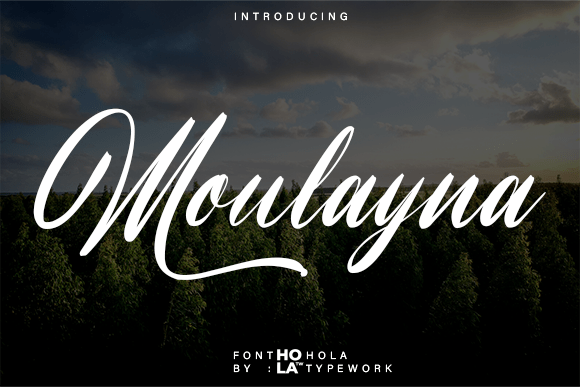
Moulayna breathes life into any design project because it doesn’t try too hard. Unlike some script fonts that feel chaotic or overly decorative, this typeface has a grounded elegance. When I first previewed it over an image banner for a boutique online store, it didn’t fight the photography; it complemented it. The strokes have a natural rhythm, mimicking the flow of pen on paper but with enough consistency to remain legible on screens.
The visual characteristics of Moulayna suggest a mood that is both creative and trustworthy. It avoids the jagged edges of rough sketch styles and the rigid uniformity of calligraphy. Instead, it sits comfortably in the realm of modern typography—approachable yet sophisticated. This makes it an excellent choice for brands that want to appear human-centric. Whether you are designing a portfolio homepage or a course sales page, the font sets a tone that says, "I care about the details," which is essential for building brand trust.
Testing Readability in Digital Layouts
The biggest risk with any script font is readability. In web design, we cannot afford to make users work to understand our message. During my testing phase, I placed Moulayna in various contexts to see how it held up against different UX challenges.
- Hero Sections: As a primary headline, Moulayna works beautifully. Its size allows the unique letterforms to shine. However, I kept the text short. Long sentences in script fonts can become a visual tangle, disrupting the user’s scanning behavior.
- Mobile Responsiveness: This is where many designers stumble. On smaller screens, thin strokes can disappear or become pixelated if not handled correctly. I found that using Moulayna for short phrases (under five words) maintained clarity even at 320px width. For longer body text, I strictly avoided it.
- Dark vs. Light Backgrounds: The font performs exceptionally well on light backgrounds with dark text, offering high contrast. On dark backgrounds, I had to slightly increase the font weight or stroke thickness to prevent the letters from feeling fragile. Image overlays also require careful opacity management to ensure the handwritten style remains distinct from the background texture.
Readability isn't just about seeing the letters; it's about cognitive load. By limiting Moulayna to headlines and key accents, we reduced the effort required for users to process information. This small adjustment improved the overall flow of the page, keeping visitors engaged rather than frustrated by difficult-to-read text.
Strategic Placement for Maximum Impact
In my experience, the power of a premium font like Moulayna lies in its strategic application. It is not a Swiss Army knife; it is a specialized tool. Here is how I recommend deploying it across different elements of a website or digital product.
Headers and Call-to-Action Areas
Moulayna excels in hero titles and section headings. I used it for the main value proposition on a product landing page, and it immediately drew the eye. The handwritten nature creates a connection with the reader, making the offer feel more personal. For call-to-action (CTA) buttons, however, I advised caution. While a script font on a button can look stylish, it often reduces click-through rates because users scan for clear, actionable text. I reserved Moulayna for the headline above the button, letting a clean sans serif font handle the CTA text for maximum conversion potential.
Banners and Graphic Elements
For social media graphics, digital ads, and blog headers, Moulayna is a powerhouse. It adds a layer of polish that stock images alone cannot provide. I used it to create custom banners for a creative portfolio site, where the font acted as a unifying element across different project thumbnails. The consistency of the style helped tie disparate visual assets together, creating a cohesive brand identity.
Font Pairing and Hierarchy
No font exists in isolation. To make Moulayna sing, it needs a partner. The golden rule of font pairing is contrast. Since Moulayna is a decorative display font with organic curves, it pairs best with geometric or neutral typefaces.
In the project I worked on, I paired Moulayna with a simple sans serif font for body copy and navigation menus. This created a clear visual hierarchy. The eye is naturally drawn to the handwritten header, then guided down to the readable body text. This combination balances creativity with functionality. For a more editorial digital identity, one might consider pairing it with a classic serif font, though this requires careful attention to scale and spacing to avoid a cluttered look.
When building a brand kit, ensuring consistency is key. Using Moulayna sparingly for emphasis, while relying on a reliable secondary font for all other content, ensures that your design remains accessible and professional. This approach supports user engagement by making the interface predictable and easy to navigate.
Technical Considerations for Web Implementation
Before integrating Moulayna into a live website, there are several technical checks every designer should perform. Not all script fonts are created equal in terms of file optimization and feature support.
- Webfont Availability: Ensure the font is available in web-ready formats (WOFF2). Large file sizes can slow down page load times, which negatively impacts SEO and user experience. Check the included styles to see if you get the full range of weights and alternates needed for your design.
- Multilingual Support: If your audience is global, verify that Moulayna supports the necessary character sets. Many decorative fonts lack extended Latin or special symbols, which can break your layout for international visitors.
- Commercial Licensing: Always review the commercial font licensing terms. Using a font on client projects, online stores, or digital templates usually requires a specific license. Skipping this step can lead to legal issues down the road.
- Alternates and Ligatures: Some modern scripts include alternate characters that can enhance the hand-drawn feel. Test these in your design tool to see if they add value or if they introduce inconsistencies that hurt the overall polish of the design assets.
Building a Polished Online Brand Experience
The goal of any web design project is to create an experience that feels seamless. Typography plays a massive role in this. By choosing Moulayna, you are making a statement about your brand’s personality. It suggests creativity, attention to detail, and a human touch.
Whether you are redesigning a blog, launching a new SaaS product, or updating a small business website, the right typeface can elevate your entire layout. Moulayna offers a unique opportunity to stand out in a crowded digital landscape. It allows you to maintain professionalism while injecting warmth and character into your content. Remember to test thoroughly, pair wisely, and use it strategically. When done right, a creative font like Moulayna doesn’t just decorate your site—it enhances your message and connects with your audience on a deeper level.
As you experiment with your next design, keep the user’s journey in mind. Let the font guide them, not distract them. With careful planning and a focus on usability, Moulayna can become a cornerstone of your digital brand identity, helping you create designs that are not only beautiful but effective.